February 2007
e-mail: coffeebreak@sigintelec.com
Find us on-line at www.sigintelec.com
Rush hour: when traffic is at a standstill
J. B. Morton
|
February 2007 e-mail: coffeebreak@sigintelec.com Find us on-line at www.sigintelec.com
Rush hour: when traffic is at a standstill J. B. Morton |
|
Hydrogen Fuel Cells |
|
The hydrogen fuel cell sector of BC's high-tech community had been growing and diversifying in recent years. Technological advances, environmental concerns and geopolitical factors slowly level the playing field for this energy source.
Fuel cells convert hydrogen and oxygen into water and electricity. They are similar in function to an electrical battery, but instead of being recharged with electrical current they are re-filled with hydrogen.
Hydrogen fuel cell were first discovered and built by Christian Schonbein (Germany, 1838) and Sir W. R. Grove (Britain, 1843). At the turn of the 20th century, fuel cells did not compete well with fossil fuels systems in the mass market. By mid-20th century, they were relegated to special applications. |
The world-wide availability of hydrogen and a rising environmental awareness re-ignited interest in fuel cells in recent years. The challenges faced by the industry include making the cells more cost-effective, establishing viable processes to mass-produce hydrogen and build a hydrogen distribution systems.
Western Canada leads the nation in both R&D expenditure (over $165 million in 2004) and the number of employees (over 1000 in 2004). Industry experts predict that as the cost of fuel cell decreases, fuel cells will become popular first in micro applications (laptops, cameras, etc.), later in larger industrial applications and finally as energy sources for busses and cars. |
|
Electronic Product Development Hardware - Firmware - HDL - PCB Layout
www.sigintelec.com |
|
Each letter is substituted for another letter of the alphabet in this pearl of wisdom: B DWAG B CT WAE
XQLZLH, FKE B CT CQGCMJ HBYPE. ILELH ICW Sharpen your pencilMr. Smith bought a $20,000 car for business use. The car depreciates at a rate of 30% per year. How many years it will it take Mr. Smith to deduct the whole value of his car? (stumped? see hints on reverse side) |
This staple of high school math was handed down to us by the Indian mathematician and astronomer Bhaskara (1114-1185). Mankind's fascination with the quadratic equation was manifested on Babylonian clay tablets as early as 3800 years ago. Ancient Greek, Chinese, Arab and Indian scholars contributed to the solution of the quadratic equation over the span of many centuries. |
|
1 PetaJoule = 1,000,000,000,000,000 Joule. Transportation in greater Vancouver costs about 85 PetaJoules every year. Less than 15 of these 85 PetaJoules are spent to create motion. |
|
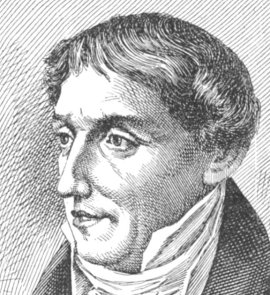
Alessandro Giuseppe Antonio
Anastasio He launched an illustrious career with a Latin poem about electricity and went on to invent the voltaic pile, a precursor of today’s electrical battery. Alessandro Volta also discovered methane and demonstrated ignition of an explosive gas using an electrical spark. Volta was an Italian professor of physics and a contemporary of Luigi Galvani. He is remembered for his view of electrical conduction as a physical phenomena, arguing against a vitalistic view that equated conducted electricity to the so-called "animal electricity". He gave his name to a crater on the moon and to one of the best known electrical units. Place a battery on you desks February 18, folks - it's Alessandro's 262nd birthday! |
 |
|
How much charge is left in that battery? A laptop computer can usually tell its user how much charge is left in its battery. This may look like a straight-forward function but measuring the level of charge directly is impractical in most situations. A simple voltage measurement can determine if the battery is completely depleted. To determine charge level with better resolution than OK or empty, displays commonly rely on charge “accounting”: assuming an initial charge, the computer subtracts energy (current integrated over time) |
and adds energy going into the battery. Unfortunately, this energy “accounting” is not as simple as it sounds. In real-world batteries, energy is lost in re-charge, charge is lost when the battery is disconnected and battery capacity changes with temperature and other factors. All these effects differ in magnitude, depending on the battery type. As a result, good “fuel gauge” computer programs are sophisticated and, more often than not, optimized for a specific device and battery type. |
|
|
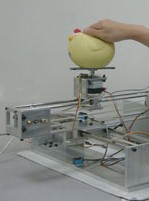
Remote Chicken Petter Ever seized with an urge to pet a chicken while surfing the internet? A team at the National University of Singapore developed a device to satiate that need. An "office system" consists of a plastic chicken mounted on an XY table. The motion of the table is converted to signal which is sent over the internet to the "backyard system". In the "backyard", the chicken is dressed in an electronics laden vest. The vest picks up the signal sent by the office system and fondles the chicken to the mutual benefit of both pet and owner. Interested? read all about it in www.mixedrealitylab.org . |
Hints for sharpen your pencil1. On the first year, deduct half of the 30% 2. In subsequent years, deduct 30% of the balance 3. $200 or less is 100% deductible |
Would you like a company or a project
featured? Suggestions or corrections? Please e-mail us at coffeebreak@sigintelec.com |
|
Hi-Tech Coffee Break is a free publication created and distributed by Signal Integrity Electronics. To subscribe to the printed edition, please fill the form on the right . |